What is pu-erh tea?
Pu-erh is a tea from Yunnan, in south-west China, made from large-leaf tea and meant to change with time. It is the only major tea that is valued for its ageing, like wine.
Where pu-erh comes from
Pu-erh takes its name from the town of Pu’er in Yunnan, where for centuries the tea of the surrounding mountains was traded and carried along the tea horse roads to Tibet. It is made from Yunnan’s large-leaf variety, Camellia sinensis var. assamica, in areas such as Menghai and Lincang. Today, pu-erh made outside Yunnan is not considered true pu-erh.
How pu-erh is made
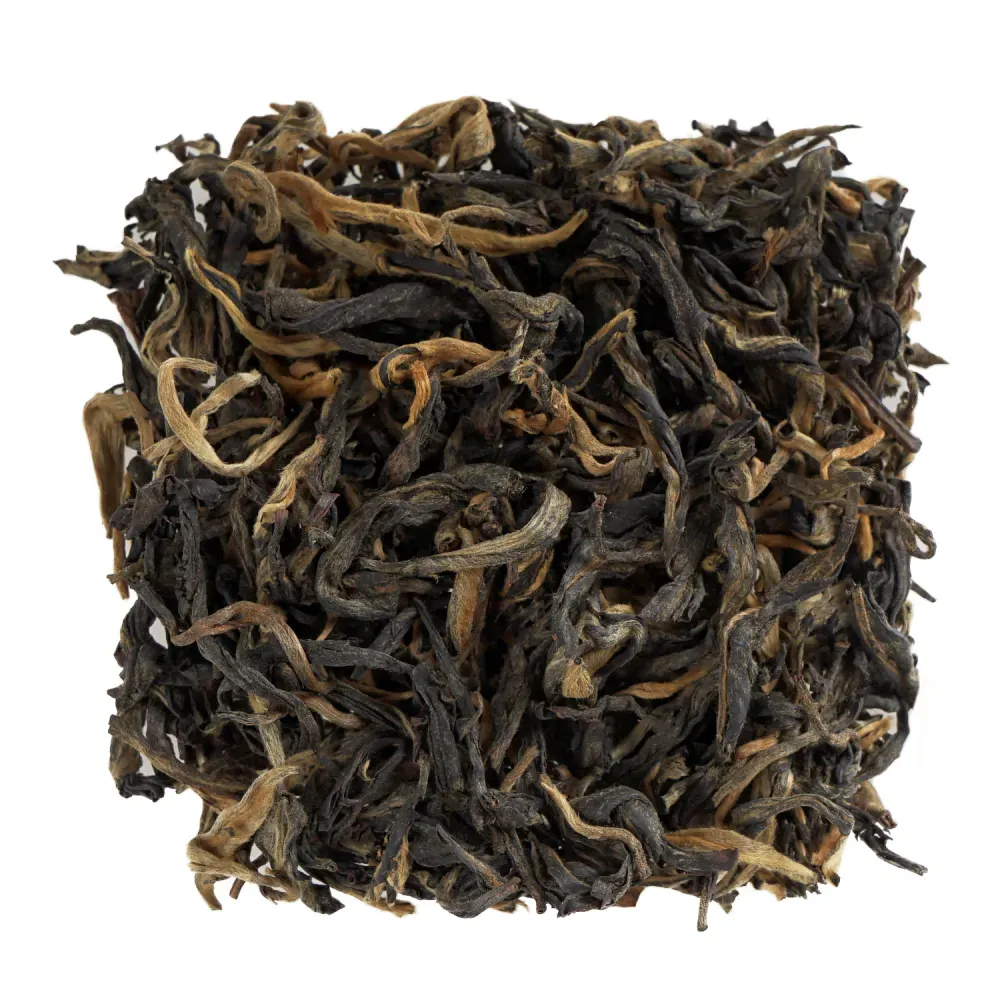
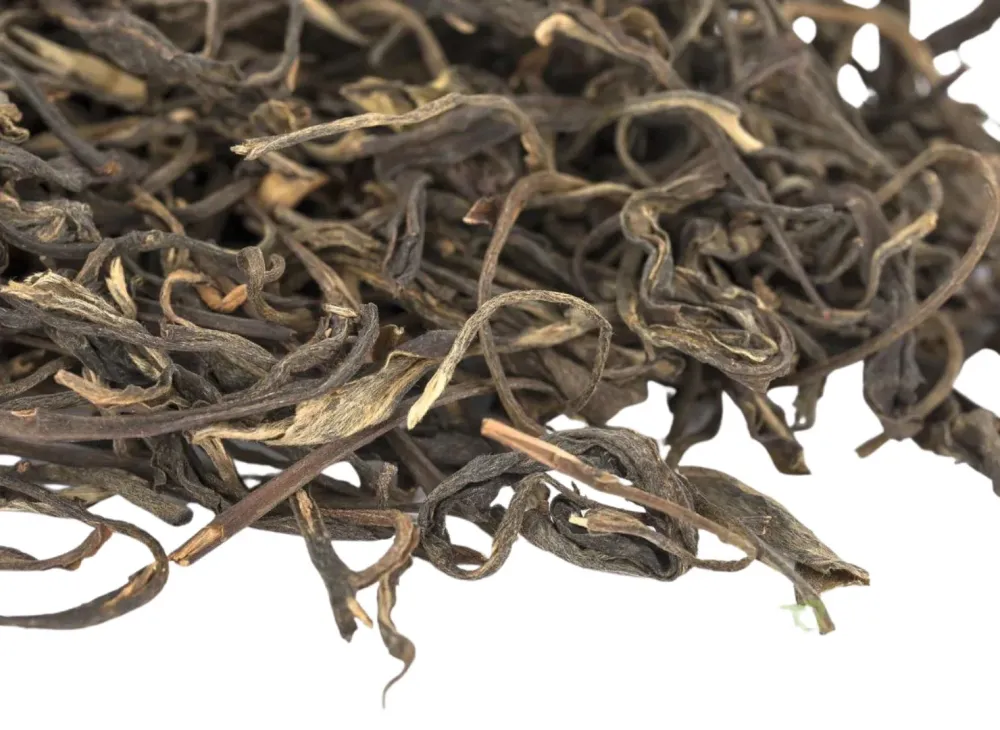
Every pu-erh starts as maocha: leaves that are briefly heated, rolled and dried in the sun. Because the leaf is not fully heated, it stays alive and keeps changing. From there it goes one of two ways. Raw pu-erh (sheng) is pressed and left to age naturally, for years. Ripe pu-erh (shou) is first piled, dampened and fermented for weeks, a method created in the 1970s, then pressed or left loose.
How pu-erh tastes, and how to brew it
Raw pu-erh is bright and bitter when young, with notes of apricot stone and camphor, and softens over the years. Ripe pu-erh is dark and smooth from the start: wet earth, dates, damp wood, no bitterness. Both are brewed with very hot water, 95 to 100°C, and both are rinsed first: a few seconds of water, poured away, to wake the compressed leaf.
Cakes, bricks and loose leaf
Pu-erh is often pressed into round cakes of 357 grams, into bricks or into small nests called tuocha, which made it easy to carry on horseback and lets it age slowly. To brew a cake, prise off a few grams with a pick, along the grain of the leaves. Loose pu-erh, like the leaf in the Box I sachets, skips that step and is easier to measure.
How to store pu-erh
Keep it away from light, strong smells and damp, at room temperature, in paper or a breathable container rather than in the fridge. Raw pu-erh keeps ageing if it can breathe a little; ripe pu-erh mostly mellows. A sealed pouch, like the two in Box I, keeps the leaf as it left the factory until you open it.
Pu-erh in Box I
Box I includes both styles, a ripe Shou Puer from Menghai and a raw Sheng Puer from Menghai and Lincang, from the same plant as its white and black teas. Session three introduces the ripe one; sessions four and seven the raw one, ending with huigan.